
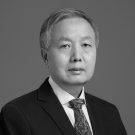
ZHANG Jie earned his Bachelor of Architecture from Tianjin University in 1985. In 1987, during his postgraduate studies, He was honored as a recipient of the inaugural Sino-British Friendship Scholarship to pursue advanced research in the UK, subsequently earning his Ph.D. in Architecture at the Institute of Advanced Architectural Studies (IoASS), University of York, in 1991. He is now a professor and architect in the field of heritage conservation and urban regeneration at Tsinghua University. He has been lecturing at School of Architecture, Tsinghua University in China since 1992 and has been the honorary dean of the School of Architecture and Urban Planning at Beijing University of Civil Engineering and Architecture since 2020.
He is a Chartered Member of Royal Institute of British Architects (RIBA), a Chairholder of the United Nations Educational, Scientific and Cultural Organization (UNESCO) on Heritage Conservation Planning and Sustainable Social Development, and hold the singular distinction of being the first Chinese scholar elected as a Honorary Member of ICOMOS in the organization’s 60-year history. He had been a board member of the International Committee on Historic Cities, Towns, and Villages (CIVVIH) of ICOMOS since 2012 and was its vice president (2018-2021). He initiated the formation of the Asia-Pacific Sub-committee of CIVVIH and served as the president. He also takes other critical positions in many domestic academic institutions, playing an essential role in promoting professional and academic progress.
Prof. ZHANG’s research lies in the inter-discipline of architecture and conservation and in investigating a sustainable development model for cities undergoing drastic changes, considering culture, ecology, economy, and community improvement in the context of rapid urbanization. Over 30 years of research and practice, with a new and unique perspective, he has systematically excavated the relationship between Chinese settlements and their landscape environments, the cultural significance, and the wisdom behind them. Through in-depth literature study and field works, he has explored the feng shui theories that determined the morphology of ancient Chinese settlements, revealed the morphological characteristics and composition laws of the built environment with the integration of ritual and landscape elements, and elaborated its obscure but insightful cultural connotation of the unity of heaven and man. He has also integrated the relevant findings with contemporary thinking in ecology, cultural heritage conservation, and sustainable development. He has published 20 academic monographs and more than 100 academic papers, such as The Cultural Gene of Ancient Chinese Space (2012,2016), Urban Conservation Methods (2020), Study on a Thousand Years of Urban Design in Beijing (2023), and Culture–Ecology Synergy: A Holistic Approach to Urban Regeneration (2024).
As a professor and scholar, ZHANG is active in international cooperation and exchange in the fields of architecture, planning, and landscape with a focus on integrated conservation. He has been in charge of Tsinghua University and MIT joint studio in Beijing for more than twenty years. With professors and students from different countries, many proactive inspirations for preserving and renewing old Beijing were born in the studio.
Professor ZHANG also attaches great importance to research and practice in the field of conservation of cultural diversity. He has won the RIBA International Awards for Excellence, Award of Distinction and Award for New Design in Heritage Contexts in UNESCO Asia-Pacific Awards for Cultural Heritage Conservation, Outstanding Award of International Award for Best Practices in Natural Resources and Planning(IABP), and more than 40 other awards by his representative works, including Ecological and Cultural Landscape Conservation Planning for Guangzhou, Landscape Design for Daming Lake Extension and Urban Enhancement in Jinan, Conservation of Sanfang Qixiang in Fuzhou, Taoxichuan Industrial Park and Regeneration of Jingdezhen Pengjia Alley Compound in Jingdezhen, and Tsinghua University Nankou National Key Laboratory Base transformed from three factories in Beijing. He was awarded National Master of Engineering Design and Geotechnique Investigation in China in 2020.
His works were displayed in the Chinese Architecture Exhibition of the 27th World Congress of Architects, the China Pavilion at Venice Biennale 2020, and China, Architecture exhibition in Lyon, France, and have further been adopted as case studies and course materials for graduate programs at Harvard University and the Polytechnic University of Turin (Politecnico di Torino).